
Retail materials differ from residential ones for one reason: hours of use. What suits a home may not survive two months in a shop.
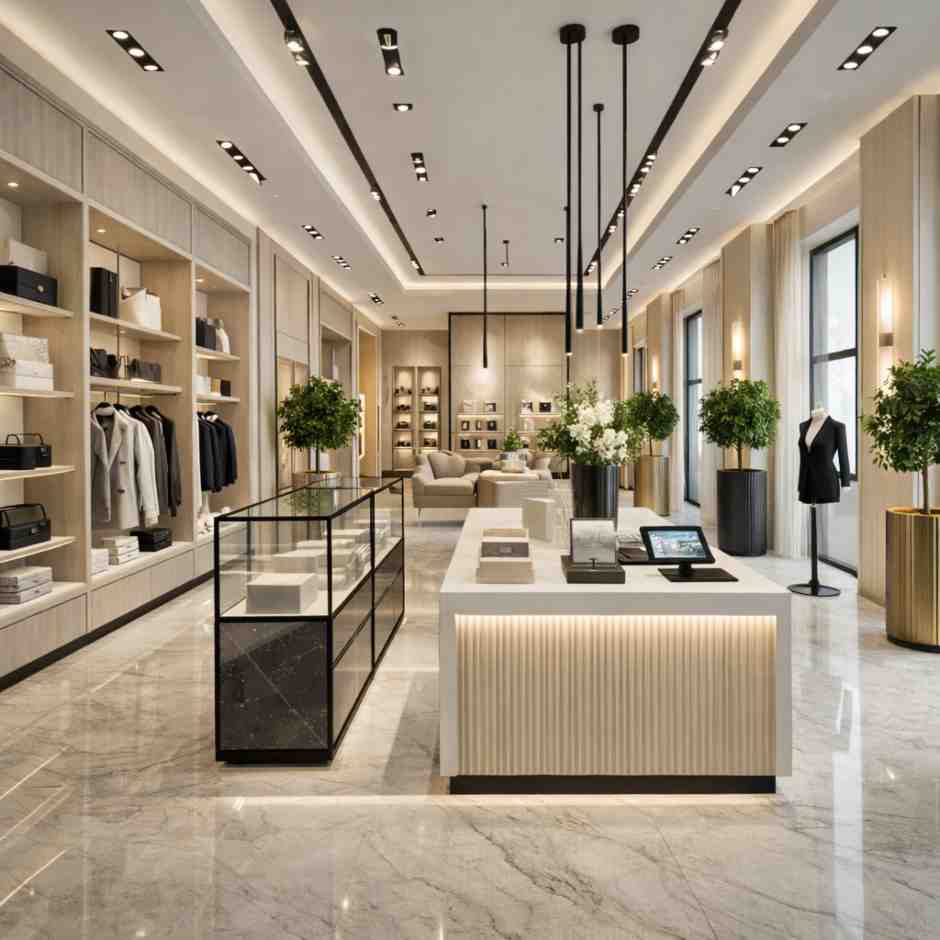
Surfaces: solid surface allows curves and invisible joints, scratches polish out, weaker against heat · engineered quartz is hard and stain-resistant, joints visible · natural marble is the most luxurious but porous and needs sealing · HPL is economical with wide colour range, edges are the weak point.
Floors: porcelain is the retail default for traffic. SPC/LVT vinyl suits speed and feels warmer. Natural wood is beautiful but demands maintenance discipline.
Walls: paint is cheapest but dirties at hand height. Panelling looks better and hides services at higher cost.
Our rule: durable where there is friction, luxurious at the viewpoints customers see and photograph first. Spreading budget evenly across every surface is the most common mistake.
FAQ
Corian or quartz for a counter? Quartz for heavy use and hardness; solid surface for curved forms and seamless joints.
Best flooring for retail? Porcelain for general use, resilient vinyl when speed of installation matters.
Is natural marble suitable for shops? In limited feature areas yes, with periodic sealing — not in high-friction zones.